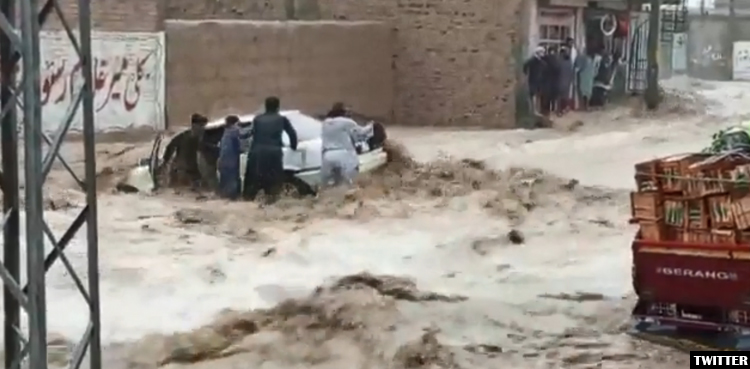
Balochistan floods: Two more dead, tally reaches 242

Balochistan, death toll, rains

Quetta: Two more people have been reported dead amid heavy rains and floods in Balochistan, the Provincial Disaster Management Authority (PDMA) reported.

According to details, PDMA told on Tuesday that five more people were reported dead amid heavy rains and floods in the province taking the tally to 242. A total of 116 men, 55 women, and 71 children have lost their lives to floods and related incidents in Balochistan.

Moreover, over 102 people suffered injuries due to floods in the past three days. A total of 1,45,936 cattle have also been reported dead in the floods, PDMA data shows.

Also Read: Six more lose lives to devastating floods in Balochistan

A total of 61,488 homes were damaged and 7,527 homes were demolished in the recent rains and floods in the province. A total of 18 bridges and 1000 km of roads have been damaged in the recent floods.


from Latest Pakistan News Breaking News from All over Pakistan - ARY News https://ift.tt/yYQiqS0

Comments

Popular posts from this blog

Pakistan floods: South Asia’s monsoon explained

Floods in Pakistan have killed more than 1,000 people after what its climate change minister called a record unbroken cycle of monsoon rains with “8 weeks of non-stop torrents”. AFP explains what the monsoon is, why it is so important and yet so dangerous, and how climate change and other man-made effects may be altering the vast life-giving but destructive annual weather system. What is the South Asian monsoon? The Southwest or the Asian Summer Monsoon is essentially a colossal sea breeze that brings South Asia 70-80 percent of its annual rainfall between June and September every year. It occurs when summer heat warms the landmass of the subcontinent, causing the air to rise and sucking in cooler Indian Ocean winds which then produce enormous volumes of rain. Why it is important? The monsoon is vital for agriculture and therefore for the livelihoods of millions of farmers and for food security in the poor region of around two billion people. But it brings destruction every ye...

Faisal Vawda foresees imminent sacking of a provincial governor

ISLAMABAD: Senator Faisal Vawda hinted at the removal of one of the provincial governors very soon. Speaking during the ARY News program, Senator Faisla Vawda said on Friday, “A provincial governor will be in troubled waters soon and his time is up. Without mentioning the name, Faisla Vawda said the governor in question has been selling his name, making money, and telling lies, now his turn has come, and he has to go home soon”. Vawda predicted that the governor’s removal would occur within the next week or two months but he will surely be removed from his post. He also took the opportunity to criticize the PPP-led Sindh government, stating that none of its cabinet members, aside from Chief Minister Murad Ali Shah, are capable of writing a paragraph in English. Vawda added that only god can save the country when Pakistan’s future is in the hands of such persons. Additionally, Vawda touched on the murder of anchor person Arshad Sharif, claiming that the facts of the case will soo...

CDA removes golden hands sculpture in Islamabad after online backlash

ISLAMABAD: The Capital Development Authority (CDA) on Monday removed a recently installed ‘Golden Hands’ sculpture located along Margalla Avenue in Islamabad. The artwork featured two large golden hands holding two balls like objects resembling a world map. Installed by a private developer, the sculpture quickly gained widespread attention on social media, sparking debate, memes, and a wave of speculation over its symbolism. Soon after its installation, the monument became the subject of intense online discussion. Social media users assigned various meanings to the structure with many interpreting it as a symbol of Pakistan’s rising global presence while others saw it as an ambitious but misplaced artistic expression. Amid the growing online buzz, CDA officials reportedly sprang into action. Initially, the sculpture was covered with cloth in an apparent attempt to minimize public reaction. Later, the structure was dismantled and removed using heavy machinery and labour teams. The ...